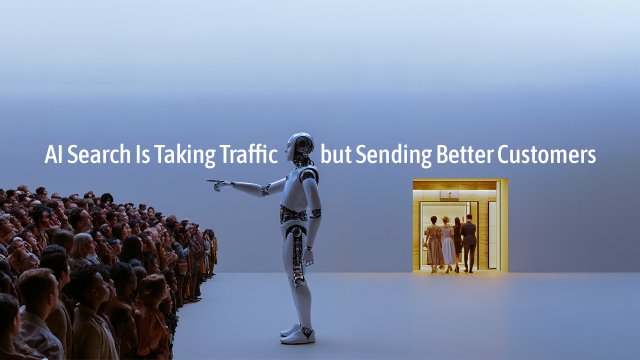
Brainlabs data covering 54 advertiser clients over a 14-month window beginning in January 2025 shows organic sessions falling 10.5 percent while AI-platform referrals rose 163 percent. AI referrals remained far too small to replace the lost traffic, yet visitors from ChatGPT, Copilot, Gemini and Perplexity generated key events at 1.5 times the rate of organic-search visitors.
The results varied by sector. Fitness, financial technology, insurance and consumer packaged goods experienced some of the largest declines, while retail, beauty and entertainment were less affected. The difference appears connected to search intent: AI summaries can satisfy many educational and comparison queries without a click, whereas transactional searches still give consumers a practical reason to visit a merchant.
Higher engagement does not establish that AI referrals produce more profitable customers. Brainlabs’ key events included purchases and newsletter registrations, but also lighter actions such as reaching the bottom of a page. Marketing teams therefore need to connect referral activity with qualified leads, revenue, deal value and retention.
Traffic remains economically important, but it can no longer serve as a complete judgment of search performance. Agency reporting must show both the volume lost and the value created by the visitors who remain. SEO retainers will also need to account for AI visibility, citations, and downstream business activity without replacing old traffic metrics with opaque AI scores.